

The Chinese 12 Zodiac: Timeless Cultural Symbols You Need to Know
- Apr 26
- 4 min read

Most people in the world know their Chinese zodiac animal. Billions of people identify with the Rat, the Tiger, the Dragon, or the Rooster, and recognise the animal that governs their birth year from Lunar New Year decorations, temple carvings, and gift shop charm bracelets.
But the Chinese zodiac — known as Shēngxiào (生肖) — is almost always understood far more shallowly than it deserves. Strip away the layers of modern pop astrology, and what you find underneath is something genuinely remarkable: an ancient system that encoded cultural values, agricultural knowledge, timekeeping, and a philosophy of human nature into twelve memorable animal portraits.
Here is what the zodiac actually is, and why it has endured for thousands of years.
What Is the Chinese Zodiac (Sheng Xiao)?
The Chinese zodiac is a twelve-year cycle in which each year is governed by one of twelve animals. Unlike the Western zodiac — which is rooted in the movement of constellations across the night sky — the Chinese system follows the lunar calendar, and its origins lie in the intersection of ancient Chinese astronomy, agricultural observation, and folk belief.
The earliest evidence of the twelve-animal system appears in texts from the Warring States period (475–221 BCE), though scholars believe its roots extend considerably further into Chinese prehistory. By the Han dynasty (206 BCE – 220 CE), the system was fully established and widely used across Chinese society.
The twelve animals, in their traditional order, are:

Each year in the twelve-year cycle is associated with one animal. But why these twelve, in this order? That is where the tradition becomes genuinely delightful.
The Legend of the Jade Emperor's Race
The most beloved explanation for the zodiac's order comes from the story of the Jade Emperor — the ruler of Heaven in Chinese mythology — who summoned all the animals of the world to a great race. The first twelve to cross a great river would each be awarded a year in the celestial calendar, in the order they arrived.
The animals set off. The Ox, powerful and industrious, waded into the current and was well positioned to finish first. What the Ox didn't notice was the small, clever Rat that had hitched a ride on his back. The moment the Ox reached the far bank and stepped ashore — the Rat leapt off and crossed the finish line first.
And so the Rat leads the zodiac, not through strength, but through wit.
The Hidden Meaning: What Each Animal Symbolises
Each zodiac animal carries a set of symbolic meanings that reflect the values and observations of classical Chinese culture. These are not arbitrary — they are a codified portrait of human temperament types, observed across millennia of daily life.
The Most Surprising Fact: The Zodiac Was Also a Clock
Here is the piece of cultural history that most people miss entirely — and it is, in many ways, the most remarkable dimension of the zodiac system.
The twelve animals were not just used to measure years. Thousands of years before mechanical clocks existed, they were also used to measure the day. The Chinese divided the day into twelve equal two-hour intervals called shí chén (时辰). Each interval was assigned to one of the zodiac animals — not arbitrarily, but according to the observed natural behaviour of each animal during that period.
The Zodiac in Modern Life
The Chinese zodiac has not faded. If anything, its cultural presence in the contemporary world is more visible than ever — carrying meaning for Chinese communities across Australia, East Asia, and every part of the world where Chinese culture has taken root.
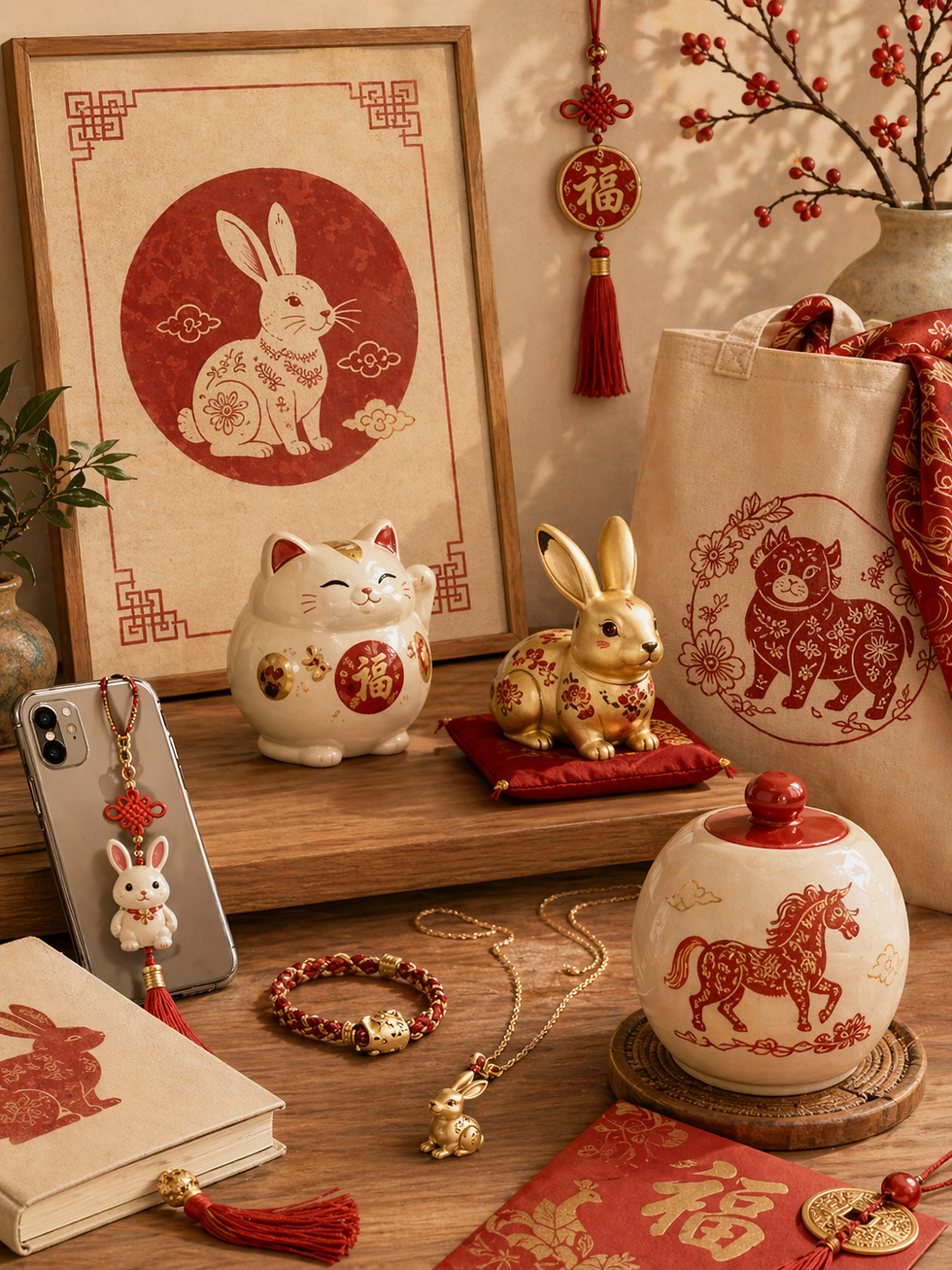
During Lunar New Year, the reigning zodiac animal is everywhere: on red envelopes and temple decorations, in the colours and motifs of celebratory textiles, in the themes of new year foods, and in the astrology columns that begin each new year with forecasts for all twelve signs.
Zodiac-themed gifts — jewellery, pendants, carved jade and resin charms, embroidered keepsakes — remain among the most popular categories of meaningful giving within Chinese culture. Unlike Western anniversary or birthday gifts, zodiac gifts are personal in a way that requires knowing something real about the recipient: their birth year, their animal, and the symbolic values it carries.
Beyond decoration and gifting, many people carry a quiet, personal identification with their zodiac animal as a kind of cultural self-knowledge. It is not unlike the way Western audiences relate to MBTI personality types or the Big Five — except that the zodiac carries centuries of refinement and the weight of lived cultural meaning behind it.
At Sinology Studio Perth,
the zodiac appears throughout our workshops — not as decoration, but as content. We paint zodiac animals in ink wash. We carve them in wooden seals. We model them in lucky charm. We cut them from red paper in the tradition of Chinese folk art that has survived for over a thousand years. Each workshop becomes a way of engaging not just with a craft technique, but with the cultural layer of meaning that the technique carries.


Comments