

A Scent to Carry: The Story of Herbal Sachets
When people first hear about the Dragon Boat Festival, they usually picture racing boats, beating drums and sticky rice dumplings wrapped in bamboo leaves.
But there is another tradition that is smaller, quieter and easier to carry around: the herbal sachet, or 香囊 (xiāngnáng in Chinese).
Filled with aromatic herbs and traditionally worn on the body, these small fabric pouches were part perfume, part seasonal accessory and part protective charm.
So why did people wear them? What did they put inside? And where exactly did a sachet go when ancient Chinese clothing did not have convenient jacket pockets?
Let us open one and explore.

First, why does the Dragon Boat Festival involve so many herbs?
The Dragon Boat Festival takes place on the fifth day of the fifth lunar month. This usually falls around the beginning of summer, when the weather in many parts of China becomes hotter, wetter and noticeably more insect-friendly. In the past, this seasonal change was also associated with a greater risk of illness.
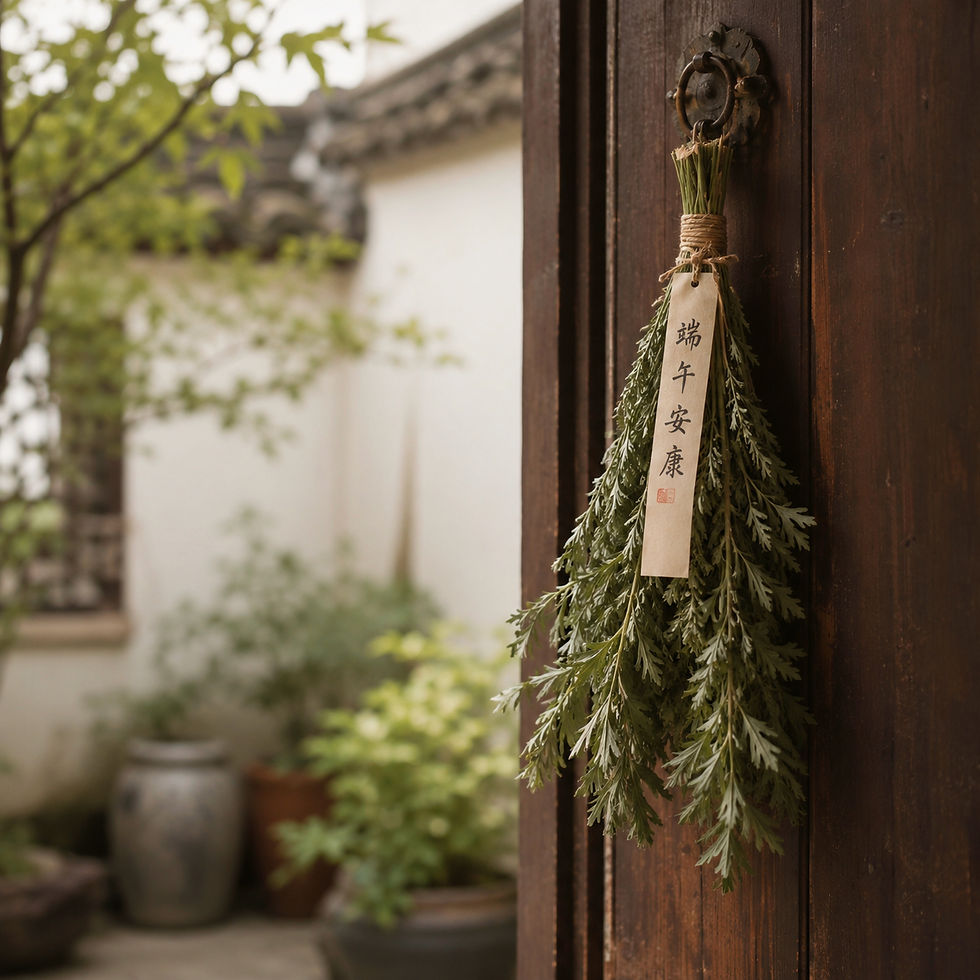
For this reason, many Dragon Boat Festival traditions were designed around the idea of protecting the home and body. Families hung mugwort and calamus near their doors, tied five-coloured threads around children’s wrists and wore pouches filled with strongly scented plants.

The history of wearing fragrant plants and pouches is older than their association with the Dragon Boat Festival. Early Chinese texts describe young people carrying aromatic objects on their clothing, while classical poetry celebrates fragrant orchids and herbs worn on the body.
By the Han period, written references describe sachets tied behind the elbow and partly hidden inside a sleeve, allowing the fragrance to escape gently as the wearer moved. It was an elegant form of personal scent: less like spraying perfume and more like carrying a tiny herb garden inside your clothing.
So, how did people actually wear one?
The answer depended on the wearer’s age, clothing and local tradition.
Children wore them proudly on the chest
Children’s sachets were often the most visible.
A parent or grandparent might hang one around a child’s neck so it rested on the chest, pin it to the front of a garment or attach it to a colourful cord. In some places, a sachet was combined with the festival’s five-coloured thread. Children might wear one sachet or several small pieces together. Against traditional clothing, the bright embroidery, tassels and animal shapes made them look almost like miniature festival costumes.
The sachet was meant to stay close to the child, carrying the family’s wish for safety, health and peaceful growth.
Adults wore them at the waist
Adults commonly attached sachets to a sash, belt or the side of a robe.
Traditional Chinese clothing often lacked the sewn-in pockets familiar today. Small fabric pouches were therefore practical as well as decorative. Different pouches could hold fragrance, coins or personal objects.
A sachet hanging at the waist moved as its owner walked, releasing its aroma little by little.

Others decorated bags, rooms and bed curtains
Not every sachet had to be worn directly on the body.
People also suspended aromatic pouches from bed curtains, doorways or personal belongings. Today, many people attach them to handbags, place them in wardrobes or hang them near a desk or bedside.
The location may have changed, but the basic idea remains the same: keep a pleasant scent and a small blessing close by.

More than a little bag of herbs
The Dragon Boat Festival sachet shows how Chinese traditions often connect several parts of life at once.
It is a piece of embroidery, but also a study of plants. It is something beautiful, but also something once considered practical. It belongs to a festival, yet it can carry a deeply personal wish.
Perhaps that is why the sachet still feels meaningful today.
It allows us to slow down, notice the scent of each plant and turn a handful of herbs into something made with purpose.

Comments