

Dragon Boat Festival Means Something Different to Me Now
When I think about Dragon Boat Festival, the first thing that comes to mind is always ZongZi (Sticky Rice Dumplings). I loved the chewy, sticky texture of the glutinous rice growing up. I've always been a savoury person - pork, salted egg yolk, mushrooms - but sweet red bean is just as popular. Every year, new flavours seem to appear. Different fillings, different combinations, and everyone gets curious to try the latest one.
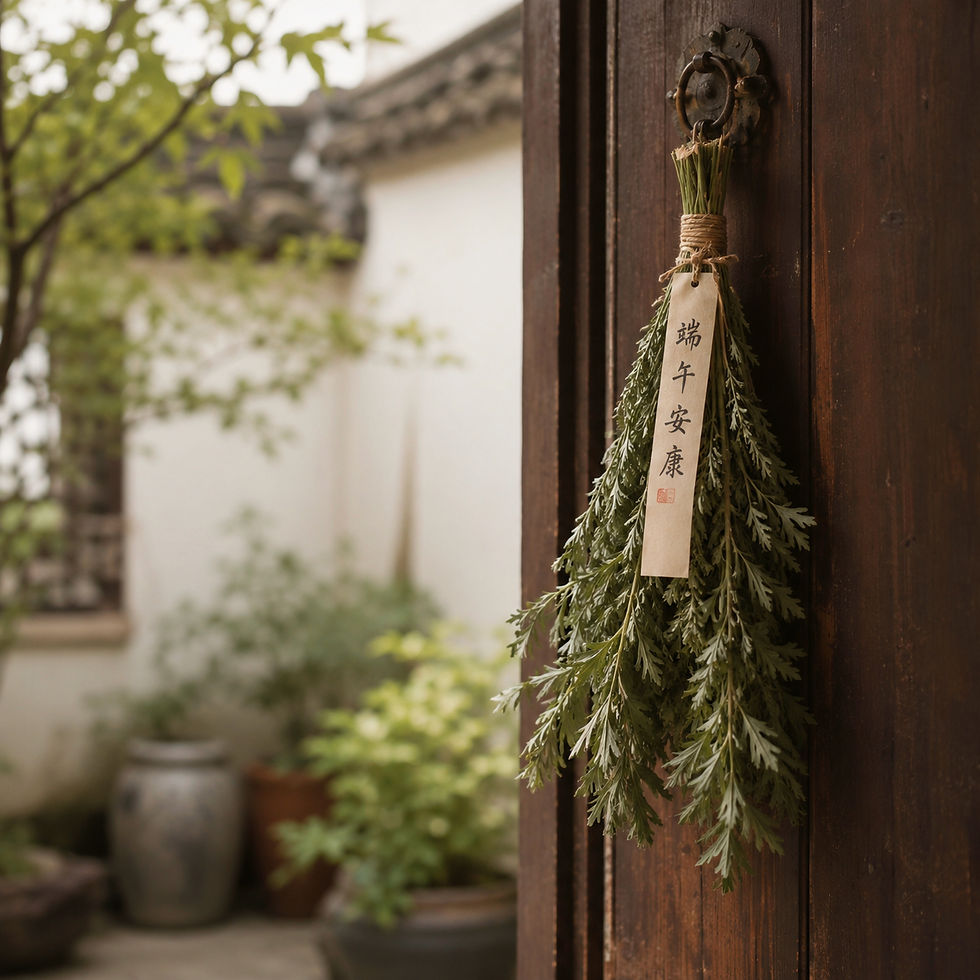
A few days before the festival, my mum would always come home from the market carrying a bundle of mugwort. She'd hang it on our front door and leave it there throughout the festival. She still keeps this tradition today. Our neighbours would do the same - sometimes they hung theirs up before we did, which served as a gentle reminder. It often became the start of a casual conversation:
"Have you bought your mugwort yet?" "Which market did you get it from?"
Those small moments felt just as much a part of the festival as the zongzi itself.

The tradition of hanging mugwort at the door goes back thousands of years.
The fifth lunar month has long been considered an inauspicious time - sometimes called the "month of poison" (in ancient China) - when the five poisonous creatures emerge with the warming weather, and illness moves easily through communities. Mugwort, with its distinctive scent and medicinal properties, was hung at doorways to purify the air and keep illness at bay.
The herbal sachets people wore served the same purpose - small, fragrant bundles of protection carried wherever you went. It was practical wisdom dressed up as ritual. And it worked well enough that people are still doing it today.
Some traditions feel a little further away from everyday life now.
Making sticky rice dumplings by hand is one of them.
When I was younger, there was always an auntie or grandmother who knew how to make them - spending hours preparing, wrapping dozens, sharing them with neighbours. It's a skill that takes patience and practice, and because it's much easier to buy them now, fewer people seem to learn it.
Dragon boat racing feels similar.
If you live in a city, chances are you'll watch it on television rather than see it in person. Even so, I always found it exciting - and what fascinated me most was never who won.
It was the rhythm.
Crowds cheer on teams as drums pound out the beat. The key to winning isn't simply strength - it's everyone moving together, trusting one another, staying in sync. That rhythm doesn't happen by accident. It takes time, practice, and belief in the people beside you. Even watching on television, you can feel it when a crew finds that perfect beat.

These days, Dragon Boat Festival makes me think less about single tradition
and more about all the small things that come with it - the smell of fresh mugwort at the door, the herbal sachet we hang up in the house, neighbours chatting outside, a table full of zongzi, and the sound of drums echoing across the water.
The festival has always been about the same thing: using what nature gives you to protect the people you love, and doing it together. That instinct hasn't gone anywhere. It's just taken different forms.
If Dragon Boat Festival is new to you
I hope this gives you a small window into how it feels - not just as a festival, but as a memory, a scent, a taste and a rhythm.
At Sinology Studio Perth,
we come to culture through making. This June, we're spending an afternoon with the herbs behind this tradition. Learning what each one does, choosing your own blend, and handcraft a sachet to take home. The sachet is the starting point. What it carries - 2,000 years of protection, intention, and care - is the real material.


Comments